Friday, March 4, 2011

Question of the Week: Low Glucose but High A1c?

The following question was submitted by a reader for discussion on my blog, "I was recently told by my doctor I have pre-diabetes and that I need to lose weight, eat right, and get my sugar levels down.  On a 12 hour fast, my glucose level was 73 yet my A1C was 6.1%.  If my glucose is low, why is my A1c still high?  What can I do?"

An A1C test result reflects your average blood sugar level for the past two to three months. It measures the percentage of hemoglobin (the protein found in your red blood cells that carries oxygen throughout your body) is covered in sugar.  Therefore, a single blood glucose test reading or "finger stick" may not show the same results reflecting that A1c number.  It is possible to test high or low during a single test.  If you are able to keep good control over your blood sugars you should see your A1c decrease in time. 

Speak to your doctor or CDE (Certified Diabetes Educator) about testing your blood sugars two hours after meals to monitor your glycemic control.  This way you can check how your meal choices are affecting your blood sugars and adjust where necessary.  Getting to a healthy weight is also another way to help achieve your blood sugar goals.

Tuesday, March 1, 2011

National Nutrition Month 2011 -- How Can I Add More Fruits / Veggies to my Diet?

It is recommended that we eat anywhere between 5 and 9 servings of fruits and vegetables on a daily basis, however, less than half of our population achieves that.  According to a 2010 Gallup Poll, nationwide, less than half of Americans (46.6%) report eating five or more servings of fruits and vegetables on five or more days per week, but 32.7% do so two to four days per week and 19.4% do so one or fewer days per week.

However many servings YOU may be currently eating - my goal is to help you add at least one more serving to your daily routine! Here are 23 suggestions as to how to add some more "color" (fruits / veggies) to your diet.

1.  Add some fruits to your regular garden salad.  Try adding fresh berries, orange or grapefruit sections, or grapes.  Salads are not just for veggies.

2.  Add new kinds of lettuces/greens to your regular garden salad.  Try a new blend.  Skip the iceberg and look at romaine, spinach, butter lettuce, radicchio, argula, mache, or one of the other many varieties!  The deeper the color, the higher nutrient benefits it has.

3.  Add new kinds of lettuces/greens to your sandwich.  Again, skip the iceberg (not high in nutrient value).  Try adding spinach leaves or one of the other varieties listed in #2.

4.  Add fruit slices to your sandwich:  add thinly sliced apple or pears onto your sandwich.  In addition to adding beneficial vitamins, minerals, etc., it will add texture and sweet to your already savory sandwich!

5.  Making mashed potatoes?  Add turnips or parsnips to the mixture.  In addition to adding texture, these veggies add nutrition and flavor!

6.   Eating pizza or making your own?  Top it with broccoli, spinach, peppers, onions, mushrooms, zucchini...

7.  Use fruit as a marinade and accompaniment with poultry and fish!  Puree berries, apples, peaches, or pears.  Use orange/grapefruit/pineapple juices as marinade.  Garnish the top with pieces of the fruit!

8.  Fruit Smoothie using skim milk or non-fat yogurt -- use frozen fruits and a banana.

9.  Dessert or snack ideas:   Drizzle warm chocolate sauce on a banana.  Smear a little peanut butter on a banana or on apple slices.

10.  Have leftover rice?  Reheat it with chopped apple, walnuts, and cinnamon as a dessert.

11.  Dessert Snack Idea:  Slice a pear, sprinkle with cinnamon and heat in the microwave for 2 minutes

12.  Lunch Idea:  Veggie Wrap or Whole Wheat Pita.  Fill with roasted vegetables and low fat cheese.

13.  Swap mayo on your sandwich for a ripe avocado.  Not only will it taste better - but much better for you.

14.  Try munching on crunch veggies instead of chips -- dip in low fat salad dressing tzatziki, or hummus

15.  Grill colorful veggie kabobs -- tomatoes, green/red peppers, mushrooms, zucchini, onions, pineapple chunks.

16.  Enjoy omelets or egg whites?  Add chopped tomatoes, peppers, onions, mushrooms...!

17.  Top your baked potato with broccoli and other veggies with 0% greek yogurt.

18.  Looking for a quick dinner -- try a stir fry!  Cut into small thin pieces peppers, onions, mushrooms, snowpeas, babycorn....use just a little olive oil.  Add the protein of your choice.

19.  Making meatloaf:  Add spinach and other grated vegetables into the mixture (carrots, onions, zucchini).

20.  Add fruits to your morning hot/cold cereal or your yogurt.

21.  Eating soup?  Chop EXTRA veggies and add to your soup.  or....  Make your own....buy some chicken/beef/veggie broth - add your favorite veggies chopped to the broth and similar until at your desired texture.  Then add either a pasta, quinoa, or brown rice to the soup. 

22.  Add veggies to your pasta by making your own "primavera":  stewed tomatoes, sauteed zucchini, mushrooms, broccoli rabe....

23.  Add veggies to your lasagna:  spinach, squash, mushrooms -- sneak them into the layers.


I hope that these suggestions have inspired you to try something new -- or at least try one of mine.  As you can see, it is easy to add veggies or fruits to what you are already to eating.

Have a suggestion?   Let's hear it!

"Eat Right With Color" --March is National Nutrition Month!

The theme of this year's  American Dietetic Association's National Nutrition Month  is to "Eat Right With Color" which encouraging healthy eating habits.  My goal is to inspire you to add some color (and flavor) to your plate on a daily basis. 


Besides being delicious, fruits and vegetables are  full of vitamins, minerals, fiber, as well as other phytochemicals and antioxidants.  The health benefits that they provide us are so valuable and many of us don't take advantage of what they offer. 

Why are the colors important? Besides for aesthetic value, each of the colors contains a class of nutrients chock full of health benefits.  So instead of eating Skittles when you want to "taste the rainbow".... reach for a few of the fruits/vegetables mentioned below instead!  See the reasons why below:

Red fruits and vegetables have been linked with heart health, memory function, decreased risk of some cancers, urinary tract health.  Red is equated to such health-promoting compounds as lycopene and anthocyanins. The darker and richer the color,  the higher the phytonutrients content.•Red: cherries, cranberries, pomegranate, red/pink grape fruit, red grapes, watermelon, beets, red onions, red peppers, radishes, blood oranges, rhubarb and tomatoes

Green fruits and vegetables have been linked with vision health, decreased risk of some cancers, strong bones & teeth.  Green means chlorophyll, and green vegetables are rich in folate and such phytonutrients as carotenoids, lutein, and indoles.  The darker the greens, the better.•Green: avocados, apples, grapes, honeydew, melons, kiwi, limes, artichokes, asparagus, broccoli, broccoli rabe, green beans, brussell sprouts, celery root, green peppers, bok choy, snow peas, and leafy greens such as spinach

Orange and yellow fruits and vegetables have been linked with heart health, vision health, decreased risk of some cancers, healthy immune system.  These vegetables/fruits are great sources of antioxidants, such as vitamin C and beta carotene (vitamin A).•Orange and deep yellow: apricots, cantaloupe, grapefruits, mangos, papayas, tangelos, pears, peaches, pineapples, carrots, yellow peppers, clementines, squash, yellow corn and sweet potatoes

Purple/blue fruits and vegetables have been linked with healthy aging, decreased risk of some cancers, improves memory function, urinary tract health.  Dark-colored fruits and vegetables are good sources of anthocyanins, a phytonutrient that brought alot of attention to blueberries and now they are touted as a superfood. Other blue and purple foods offer similar benefits.•Purple and blue: blackberries, blueberries, plums, raisins, eggplant, purple cabbage, and purple-fleshed potatoes

White fruits/vegetables have been linked with heart health, lowers cholesterol, decreased risk of some cancers and some contain a phytonutrient called allicin.
•White, tan and brown: bananas, brown pears, dates, white peaches, cauliflower, mushrooms, onions, parsnips, turnips, white-fleshed potatoes and white corn.

For more information on National Nutrition Month - check out the American Dietetic Association's website: http://www.eatright.org/.

Tuesday, February 22, 2011

Question of the week: Choosing a Healthy Cereal

The following question was submitted by one of my readers for discussion on this week's blog posting: "I love cereal and with my new diagnosis of type 2 diabetes, I'm wondering if I can still have cereal in my diet.  Are there any types to avoid?"

Yes, absolutely you can include cold or hot cereal as part of your healthy diet.  There are literally hundreds to choose from when you go to the store - some of them are full of vitamins, minerals, fiber, and whole grains while others are full of sugar.  The trick is to find a healthy one that tastes good and not like cardboard.

In order to make a healthy choice it is important to read the label because not all cereals are created equal!

  • Check the serving size:  Some cereals range from 1/2 cup to 1 cup for a single serving.  This way you can accurately account for the amount of calories.  
  • Measure it out:  Use a measuring cup to accurately measure out the amount of cereal you are pouring - this way you know exactly how much calories, carbs, and fiber you are consuming.
  • Use a smaller bowl:  Fool the eyes to think you are getting a bigger portion than you are.
  • Fiber:  Look for cereals that are high in fiber.  5 or more grams of fiber is a good target to look for when looking for a cereal.  Higher fiber cereals will keep you satisfied longer.
  • Read the ingredients:  Any cereal with sugar, corn syrup, high fructose corn syrup, cane sugar, or dextrose as one of the first couple of ingredients should be avoided.  Any ingredient that you don't recognize that ends is "ose" is a sugar. Avoid cereals that have the words "frosted" or "sugar" in their name.
  • Whole Grains:  Choose a cereal that is made with whole grains and has it as its first listed ingredient on the nutritional facts panel.
  • Carbohydrates:  If you are on Controlled Carbohydrate Meal Plan - find a cereal that fit into your plan.
Regarding hot cereals such as oatmeal:

  • Instant Oatmeal has had most, if not all,of the fiber and cholesterol-reducing properties from it during the milling and "processing".  Look for quick cook and steel cut varieties.  These varieties do take longer to cook than the instant but they are healthier than the instant packets.  You can make a large batch - keep it refrigerated - and microwave portions each morning to save time.  Read the labels as some of the flavored oatmeals are full of sugar.

Friday, February 18, 2011

Question of the week: The Sweet N' Low-Down on Artificial Sweeteners?

The following question was submitted by one of my readers for discussion on the blog, "I have diabetes and am wondering about whether stevia is safe for me to use.  Could you let me know which sweeteners will not have an effect on my blood sugar and if stevia is ok for me to use?"

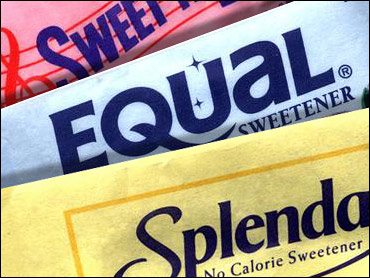
Stevia (also marketed as "Truvia") is just one of many artificial sweeteners on the market today.  Splenda, NutraSweet, and Sweet N Low, are other sugar substitutes used in the same way as Stevia and all have been approved for consumption by the FDA. These sweeteners in particular have little to no calories and carbohydrate so the effect on your blood sugar will be minimal, if at all.  As with anything, use in moderation - as the products that these substances are found in are usually less than optimal (i.e. diet soda, snacks).

Stevia comes from a South American plant and it is the leaves that contains compounds that give it sweetness.  The Stevia leaves have been described as 10 - 15 times sweeter than sugar so you don't need much to get the sweetening effect.  The refined extracts of Stevia called steviosides (a white powder) claim to be 200-300 times sweeter than table sugar which may be too strong for certain people. Some feel that the product has a slight aftertaste.  Again, Stevia is okay for use, however I would suggest only in moderation.


Each of the artificial sweeteners is produced differently so they will all have different properties in relation to cooking.  Check with the manufacturer's website to see which artificial sweeteners are appropriate to cook with, bake with, or just use in beverages.

Thursday, February 10, 2011

Question of the Week: "Pre-Diabetes & Fruit. Is it ok?"

The following question was submitted by a reader for discussion this week, "I found out I have pre-diabetes.  I'm very confused and don't know what I should do to treat it.  My friend told me to avoid all fruits.  Could you help me with how to treat my new diagnosis and if it's ok to eat fruit? "

First, with any new diagnosis and any confusion you may have, I suggest you speak further with your doctor or a C.D.E. (Certified Diabetes Educator) to clarify all of your questions.

Those diagnosed with pre-diabetes are at higher risk to be diagnosed with Type 2 diabetes in the future however, there are things you can do to help prevent or delay that from occuring.   A healthy and balanced low fat diet that is also lower in calories is helpful.   Physical activity is also something that should be included into your daily routine.ay diabetes.

Fruit is a carbohydrate and that is probably what  causing you the confusion, however fruit is an excellent food to be including as part of your diet.  Instead of reaching for a cookie, or another unhealthy sweet snack - fruit is obviously a better choice.  Fruits are full of vitamins, minerals, fiber (which will keep you fuller, longer), and many other antioxidants and phytochemicals that have health benefits.

Since fruit is a carbohydrate, you do have to watch your portion sizes.  One serving of fruit has 15g of carbohydrate. 

Here are some sample serving sizes that all are equivalent to 15g of carbohydrate:
  • 1 Small Apple
  • 1 Small Orange
  • 1 Small Banana (4")
  • 17 Grapes
Keep in mind that dried fruits are also allowed but in much smaller portions.  Just 2 Tablespoons of raisins have 15g of carbohydrates!  This is because all of the water is taken out.  What would you rather have:    17 Grapes  or  2 Tablespoons of Raisins?    I think the grapes would be much more satisfying!
 
There is the same amount of carbohydrate in 4 oz of fruit juice as there is in a small piece of fruit (15g)!
 1 Small Apple has the same amount of carbohydrate as just 4oz of Apple Juice.
 And... the apple has more fiber and won't spike your blood sugar as fast.

Wednesday, February 2, 2011

Question of the Week: Healthy Pizza Choices?

The following question was submitted by one of my readers, "Friday nights my family & I have dinner at our favorite pizza restaurant. Now that I've been diagnosed with diabetes I don't know what to order. Could you help me with what (if anything) I can order?"

It is still possible to enjoy pizza as part of a healthy diet as long as you watch your portions and follow these guidelines when ordering:

a. When choosing toppings, stick with healthy fresh veggies such as peppers, onions, tomatoes, and mushrooms. Avoid toppings such as extra cheese, meatballs, ham, pepperoni, and sausage.

b. When possible, look for a whole wheat crust and/or thin crust. Avoid thick crusts, deep dish, or crusts stuffed with cheese.

c. Portion size is important. Stick with one slice and have a side salad (dressing on the side) prior to eating your pizza.

d. Skip the breadsticks and/or the garlic bread. Pizza already contains plenty of carbohydrate.

e.  **Avoid dipping sauces such as those available at Papa John's.

An even better alternative to dining out in a pizza restaurant is to make your own at home.  Many supermarkets carry fresh pizza dough (whole wheat), pizza sauce, and low fat/skim mozzarella cheese.  This way you can control the toppings and ingredients!  It is also fun to make it together.  Another option is to use the whole grain English muffins instead of the pizza dough.