Saturday, May 7, 2011

Stop The Sugar Sabotage!

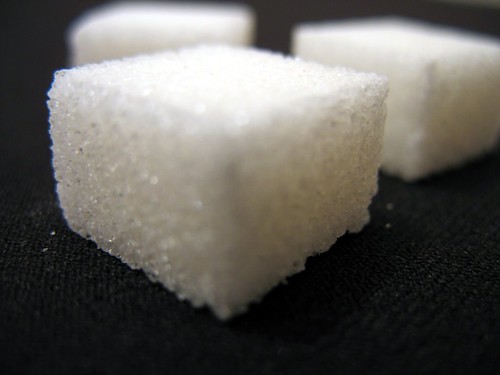
Sugar is found in many of the foods that we eat.  In some foods such as fruit, milk, or milk products, these sugars are naturally occurring (fructose, lactose).  Other foods have sugar added during either the manufacturing process, the preparation, or at the table.  These sugars are called “added sugars”.  It is these “added sugars” that pose the problem for Americans.  “Added sugars” contribute an average of 16% of the total calories in the Western Diet according to the 2010 US Dietary Guidelines.

The American Heart Association and the U.S. Dietary Guidelines recommend that we limit the amount of added sugars that are consumed.  The AHA recommends that women consume no more than 100 calories/day in added sugars while men should consume no more than 150 calories/day in added sugars.


Here are some tips to lower your sugar intake:


1.  Take all sugar off the table!  Put away any sugar (white, brown, syrups, or honey) off your table.  Out of sight, out of mind!

2. Be mindful of sweeteners you use on a daily basis – whether it is adding sweeteners in coffee, tea, milk, cereal, pancakes, waffles, etc.  Use a smaller amount and try to wean yourself off from using them – or find healthier substitutes.

3. Choose sugar-free or reduced sugar varieties of beverages when available.

4. Buy fresh or frozen fruits.  If buying canned/jarred fruits – choose those packed in fruit juice and NOT heavy syrup.

5. Instead of adding sugar or syrup to breakfast cereals, try fresh, freeze-dried, or frozen fruit.
6.   When baking, try reducing the amounts of sugar added by 1/3 or ½  or substitute sugar with an equal part of unsweetened apple sauce.

7. Use extracts such as almond, lemon, or vanilla in baking instead of sugar.

8.  Try ginger, cinnamon, allspice or nutmeg to enhance the flavor of desserts instead of sugar.

9. Try using artificial sweeteners (in moderation) such as
stevia, sucralose, aspartame, or saccharine to replace sugar. 

10. Watch portion sizes – too much of any food is not good for you.

11. Read food labels – sometimes foods that you don’t think contain sugar may have it in one form or another such as pasta sauce, salad dressings, and bread.

12.  Read labels!  Sugar can be listed in many forms.  If you see any of the following listed in the ingredients.... it is the same as SUGAR:
  • Sugar:  Brown, Powdered, Turbinado, Maple
  • Corn Syrup
  • Corn Sugar
  • High Fructose Corn Syrup
  • Brown Rice Syrup
  • Dextrin
  • Sucrose
  • Fructose
  • Dextrose
  • Glucose
  • Maltose
  • Lactose (Milk Sugar)
  • Honey
  • Molasses
  • Agave Syrup
  • Cane Juice
  • Beet Juice
If the ingredient ends in "-ose" it is a form of sugar.  If the ingredient ends in "-ol" it may be a sugar alcohol.

Thursday, May 5, 2011

Question of the Week: Healthy Breakfast Choices for Special Occasions

The following question was submitted to me for discussion on this week's blog post, "On special occasions, my family usually gets together for a big breakfast.  Now that I have diabetes, I'm not sure what I can eat.  Waffles, pastries, omelets, bacon, or what?  What are the best items I should choose? "

There are sure to be many delicious temptations on special occasions when you family gets together, whether it is for breakfast, lunch, or dinner.  Additionally, when you are not the one preparing the foods, or reading the labels of the foods or ingredients used, it may be a bit overwhelming to make the correct choices.  

As with any meal - be portion-sized minded and try to keep your breakfast balanced to more than just carbohydrates - be sure to have some protein.

Muffins and other baked goods are usually very high in calories and carbohydrates and low in nutritional value.  Best to skip past these.    I

Bagel-Shop Sized Bagels are usually around 400 kcals each and equivalent to at least 4 - 5 Carbohydrate choices.   You can get more "bang" for your carb/calorie buck elsewhere.... Croissants and Brioches are usually made with alot of butter.  Best to find a delicious whole grain bread (and there are many).  Just watch your portion size.  Depending on side - usually one slice equals one serving or carbohydrate choice (15g).  Look for whole grain varieties of english muffins and breads and keep to 1 - 2 carb choices.

Donuts are fried, full of sugar and oil.  They may taste delicious but all they will give you is calories, and carbohydrates and leave you hungry for more.

Look for low fat, low calories varieties of margarine, cream cheese, and jam.  Use them sparingly.  A little goes a long way!

Good Choices:

1.  Egg White Omelet: Add veggies (mushrooms, tomato, peppers, onions) - add a sprinkle of low fat cheddar cheese.  If you like it hot, season with a dash of hot sauce.  Eat with a slice of whole wheat toast!  Full of protein and fiber this will be delicious and filling!

2.  Steel Cut Oats -  (Cooked in water.)  Top it with Fresh Fruit and a sprinkle of almond slivers or walnut halves for crunch.

3.  French toast made with Multi-Grain or Whole Grain Bread sprinkled with Cinnamon.  Watch your portion size with these (2 slices max).

4.  Greek Yogurt:  Fresh Fruit and a Sprinkle of Nuts for crunch.  High in protein and will keep you full!

5.  Whole Grain Ready To Eat Cereal:  Read the labels to ensure you are choosing a whole grain variety and one in added sugars, low fat, and low sodium.  Look for one with more than 3 - 4 grams of Fiber to keep you full.  Top the cereal with cut up strawberries, raspberries, or blueberries for fiber, vitamins, minerals, and antioxidants!

6.  If available, choose turkey bacon, turkey sausage, or chicken sausage it is leaner than regular.  Watch your portions (do I sound repetitive?)!!! - stay to no more than 2 strips or links if possible.  I like to break them up into pieces and sprinkle into an egg white omelet.  It makes a little go a long way!

Monday, May 2, 2011

Question of the Week: Healthy Salad Dressing Options

The following question was submitted for discussion on this week's blog, "I've been trying to increase my salad intake and am not sure about what type of dressing to choose.  Could you give me some suggestions for salad dressings that are acceptable for someone with diabetes?"

First, it is great that you want to increase the amount of salad you eat.  Greens and vegetables are loaded with lots of vitamins, minerals, nutrients, and FIBER!  In addition to being "nutrient-dense", they are low in calories, and will keep you feeling fuller longer!

Salad Dressings should always be on the side so you can control the amount used, and I always suggest dipping your fork in the dressing rather than pouring it on.   Always remember to watch your portions.  It is easy to pour mindlessly...  If using a commercially produced dressing, READ the labels.  Many of these dressings are full of fat, salt, and sugar, and high in calories.

When eating out, choose reduced or fat free varieties when available.  Ask for fresh lemon wedges to squeeze over your salad with black pepper in lieu of dressing.  Oil and vinegar is always a better choice and be sure to use more vinegar to oil.  Avoid creamy based dressings when possibly.

Experiment with other types of vinegar and oil combinations.
 
Here are some healthy dressings (inspired by Mark's Daily Apple) that are quick and easy for you to make at home:

**Raspberry Vinaigrette
1/2 cup raspberry vinegar
1 tbsp of honey
1 tbsp fresh mint leaves, finely chopped

**Parsley Vinaigrette
3 tsp olive oil
2 tsp lemon juice
1/4 tsp onion powder
2 tsp chopped parsley

Alton Brown of the Food Network has a no Guilt Caesar Dressing : No Guilt Caesar Salad Dressing!

Bon Appetite!

Monday, April 25, 2011

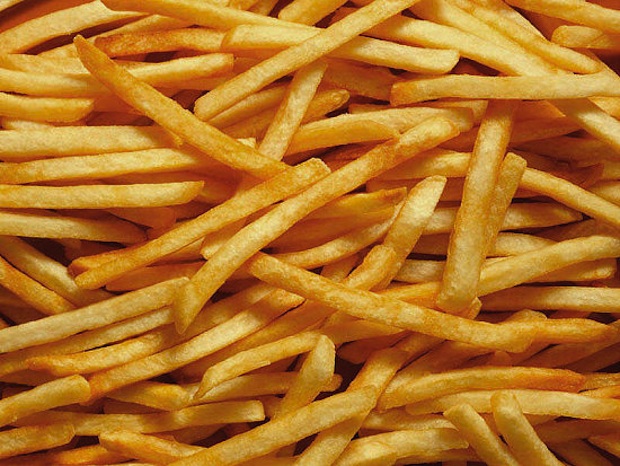
Wendy's Natural Cut French Fries With Sea Salt?: Let's Get Real!

Have you all seen/heard the latest ad by Wendy's all over the media?   "Try Wendy's New Natural Cut French Fries with Sea Salt?"  This is the latest attempt by the fast food industry to try throw buzz words at the public to get the perception that a new item is healthy when in fact it is not. 

1.  "Natural Cut" has nothing to do with the product's ingredients, it is merely referring to the look of the product.  They have decided to leave some of the skin on, and the thickness of the fries has changed. 

2.  These fries are ANYTHING but natural.  Dextrose (also known as SUGAR) is the 3rd ingredient.  These "Natural Cut" French Fries undergo several  treatments,which include being sprayed with a chemical called Sodium Acid Pyrophosphate (the 4th ingredient listed), which prevents the potatoes from browning during the two deep frying sessions they go through (once at the factory and once again at the restaurant).

3.   Another unnatural ingredient called Dimethylpolysiloxane, can be found in these "Natural Cut French Fries with Sea Salt".  Dimethylpolysiloxane is a silicone based anti-foaming agent is added to the fries that helps to stabilize the frying oil, which would otherwise become foamy after repeated uses.


4.  Then there is the salt.  Sea salt and table salt have the same basic nutritional value — both mostly consist of two minerals — sodium (Na) and chloride (Cl).  Sea salt is not any healthier than regular salt.  However, sea salt is often marketed as a more natural and healthy alternative. The real differences between sea salt and table salt are in their text, taste and processing, not their chemical makeup. Table salt is more heavily processed to eliminate trace minerals and usually contains an additional additive to help prevent clumping. Most table salt also has added iodine.  Sea salt produced through evaporation of seawater, usually with little to no processing.  Some trace minerals and elements are left behind depending on the water source.
A medium sized portion of this product (142g) still  has 500 mg of Sodium. Just for comparison McDonald's Medium Fries (117g) have 270 mg of Sodium while their large sized fries (154 g) has 350 mg of sodium.

5.  Finally, just for the finally dose of reality:  a medium sized portion of these fries has 420 kcals and 20 grams of fat.  Wendy's Nutrition

As you can see, what a company may call "Natural" may not be so "Natural".......

Thursday, April 21, 2011

Question of the Week: Sugar & Carb Free Diets?

The following question was submitted for discussion on this week's blog post, " I was recently diagnosed with Pre-Diabetes and was wondering how strict my diet really needs to be?  Does every meal and snack need to be completely sugar and carb free?"

First, I want to say that's it is great that you want to make some positive changes to your diet.   Start with small achievable changes and master those as longtime habits are sometimes difficult to break. 

Your meals and snacks should not be carb-free.  Carbohydrates play an important part of everyone's diet no matter who you are.  Carbohydrates are the main source of energy for your body.   The important point that needs to be made is the carbohydrates that you consume should be  those considered "healthy carbohydrates" such as fruits and vegetables, low or nonfat dairy products, and whole grains (i.e. quinoa, brown rice, wheat pasta, multigrain bread).

Unhealthier choices of carbohydrates are those that should be limited or eliminated.  This category consists of items that are usually calorie dense yet lack the proper nutrients.  These "unhealthier" carbohydrates include choices such as baked goods, white rice, white pasta, and white bread.

Healthy carbohydrate choices should consist of approximately 45-65% of your total daily caloric intake.  For example,  if your intake was 1800 kcals for the day, calories from carbohydrate should range from between 810 kcals and 1170 kcals.  Keep an eye on portion sizes to keep your calories in check.

Sunday, April 17, 2011

Question of the Week: Fighting the Nightly Sweet Tooth"

The following question was submitted for discussion on this week's blog post: "I have a sweet tooth at night.  I like to reward myself after a hard day at work with a bowl of ice cream before bed.  Is this ok to do since I now have diabetes? "

It is not uncommon to crave something sweet in the evenings or wanting to reward one's self at the end of a hard day with a sweet treat.   Doing this from time to time,  in small portions (1/2 Cup), while watching the rest of your daily intake, and while incorporating exercise (30 minutes minimum) into your daily routine should not be an issue.  Treats such as these are best for special occasions such as social gatherings.

If you choose ice cream as a treat, there are many types available that are low fat (sometimes marketed as "slow churned"), low calorie (such as Weight Watchers or Skinny Cow), and there are no-sugar added varieties frozen treats available.  There are also many very delicious varieties of frozen yogurt available that are a healthier alternative to full-fat ice cream.  Keep in  mind that despite the fact that these aforementioned alternatives are healthier choices, you still need to adhere to the 1/2 Cup portion guideline.

Avoid high calorie/fat/sugar toppings for your frozen dessert.  Whipped Cream, syrups, sauces, and sprinkles will add more calories, fat, and carbohydrates without any nutritional value.  

Wednesday, April 6, 2011

Question of the week: Ordering Healthy at a Sandwich Shop

The following question was submitted for discussion on this week's blog posting:  "On my lunch breaks I go to a sandwich shop.  I usually get a large deluxe sandwich with a side of potato salad or coleslaw.  Now that I have diabetes, I’m trying to modify my lunch order.  Can you make some suggestions of what to order?"


There are many delicious menu items that you can still order from a sandwich shop despite your recent diagnosis.  Here are some suggestions for modifying your order to make it "healthier":

1.  Instead of having your sandwich on a hoagie roll, choose whole wheat or multigrain bread.  If you make it an open-faced sandwich to eliminate some of the excess bread, even better!

2.  Choose a lean meat such turkey breast, roast beef, or chicken breast.  Avoid processed meats like bologna and salami.  Choose low sodium varieties when available.   Try to keep to 3 - 4 oz of meat on your sandwich (put the rest of it aside to make another sandwich or for lunch the following day). 

3.  If cheese is a must - choose a low fat, low sodium variety.  Watch your portion.  Try to limit to one slice of cheese (for flavor).

4.  Bulk up with veggies.  Load up your sandwich with lettuce, tomato, cucumber slices, and green pepper rings.  This is a great way to get your "5 a Day" and feel full without the extra calories and fat.  Be creative, ask for spinach instead of iceberg lettuce!

5.  Skip the chips,  potato, macaroni, or pasta salads.  Opt for a side garden salad with a light dressing on the side.  If you aren't in the mood for salad, choose a broth based soup (1/2 cup).

6.  Pass on the Mayo:  Choose mustard or ripe avocado to spread on your sandwich.

7.  Watch your portions - If your sandwich is big - Eat half, save half!