
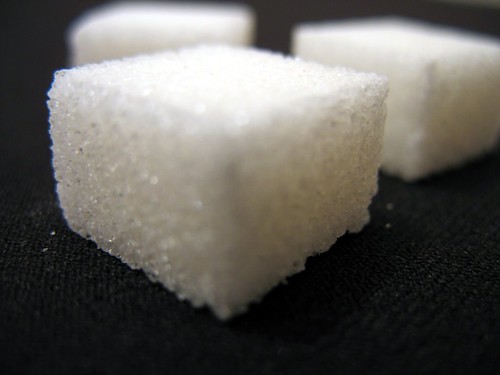
The American Heart Association and the U.S. Dietary Guidelines recommend that we limit the amount of added sugars that are consumed. The AHA recommends that women consume no more than 100 calories/day in added sugars while men should consume no more than 150 calories/day in added sugars.
Here are some tips to lower your sugar intake:
1. Take all sugar off the table! Put away any sugar (white, brown, syrups, or honey) off your table. Out of sight, out of mind!
2. Be mindful of sweeteners you use on a daily basis – whether it is adding sweeteners in coffee, tea, milk, cereal, pancakes, waffles, etc. Use a smaller amount and try to wean yourself off from using them – or find healthier substitutes.
3. Choose sugar-free or reduced sugar varieties of beverages when available.
4. Buy fresh or frozen fruits. If buying canned/jarred fruits – choose those packed in fruit juice and NOT heavy syrup.
2. Be mindful of sweeteners you use on a daily basis – whether it is adding sweeteners in coffee, tea, milk, cereal, pancakes, waffles, etc. Use a smaller amount and try to wean yourself off from using them – or find healthier substitutes.
3. Choose sugar-free or reduced sugar varieties of beverages when available.
4. Buy fresh or frozen fruits. If buying canned/jarred fruits – choose those packed in fruit juice and NOT heavy syrup.
5. Instead of adding sugar or syrup to breakfast cereals, try fresh, freeze-dried, or frozen fruit.
6. When baking, try reducing the amounts of sugar added by 1/3 or ½ or substitute sugar with an equal part of unsweetened apple sauce.
7. Use extracts such as almond, lemon, or vanilla in baking instead of sugar.
8. Try ginger, cinnamon, allspice or nutmeg to enhance the flavor of desserts instead of sugar.
9. Try using artificial sweeteners (in moderation) such as stevia, sucralose, aspartame, or saccharine to replace sugar.
10. Watch portion sizes – too much of any food is not good for you.
11. Read food labels – sometimes foods that you don’t think contain sugar may have it in one form or another such as pasta sauce, salad dressings, and bread.
7. Use extracts such as almond, lemon, or vanilla in baking instead of sugar.
8. Try ginger, cinnamon, allspice or nutmeg to enhance the flavor of desserts instead of sugar.
9. Try using artificial sweeteners (in moderation) such as stevia, sucralose, aspartame, or saccharine to replace sugar.
10. Watch portion sizes – too much of any food is not good for you.
11. Read food labels – sometimes foods that you don’t think contain sugar may have it in one form or another such as pasta sauce, salad dressings, and bread.
12. Read labels! Sugar can be listed in many forms. If you see any of the following listed in the ingredients.... it is the same as SUGAR:
- Sugar: Brown, Powdered, Turbinado, Maple
- Corn Syrup
- Corn Sugar
- High Fructose Corn Syrup
- Brown Rice Syrup
- Dextrin
- Sucrose
- Fructose
- Dextrose
- Glucose
- Maltose
- Lactose (Milk Sugar)
- Honey
- Molasses
- Agave Syrup
- Cane Juice
- Beet Juice
If the ingredient ends in "-ose" it is a form of sugar. If the ingredient ends in "-ol" it may be a sugar alcohol.

