Tuesday, February 22, 2011

Question of the week: Choosing a Healthy Cereal

The following question was submitted by one of my readers for discussion on this week's blog posting: "I love cereal and with my new diagnosis of type 2 diabetes, I'm wondering if I can still have cereal in my diet.  Are there any types to avoid?"

Yes, absolutely you can include cold or hot cereal as part of your healthy diet.  There are literally hundreds to choose from when you go to the store - some of them are full of vitamins, minerals, fiber, and whole grains while others are full of sugar.  The trick is to find a healthy one that tastes good and not like cardboard.

In order to make a healthy choice it is important to read the label because not all cereals are created equal!

  • Check the serving size:  Some cereals range from 1/2 cup to 1 cup for a single serving.  This way you can accurately account for the amount of calories.  
  • Measure it out:  Use a measuring cup to accurately measure out the amount of cereal you are pouring - this way you know exactly how much calories, carbs, and fiber you are consuming.
  • Use a smaller bowl:  Fool the eyes to think you are getting a bigger portion than you are.
  • Fiber:  Look for cereals that are high in fiber.  5 or more grams of fiber is a good target to look for when looking for a cereal.  Higher fiber cereals will keep you satisfied longer.
  • Read the ingredients:  Any cereal with sugar, corn syrup, high fructose corn syrup, cane sugar, or dextrose as one of the first couple of ingredients should be avoided.  Any ingredient that you don't recognize that ends is "ose" is a sugar. Avoid cereals that have the words "frosted" or "sugar" in their name.
  • Whole Grains:  Choose a cereal that is made with whole grains and has it as its first listed ingredient on the nutritional facts panel.
  • Carbohydrates:  If you are on Controlled Carbohydrate Meal Plan - find a cereal that fit into your plan.
Regarding hot cereals such as oatmeal:

  • Instant Oatmeal has had most, if not all,of the fiber and cholesterol-reducing properties from it during the milling and "processing".  Look for quick cook and steel cut varieties.  These varieties do take longer to cook than the instant but they are healthier than the instant packets.  You can make a large batch - keep it refrigerated - and microwave portions each morning to save time.  Read the labels as some of the flavored oatmeals are full of sugar.

Friday, February 18, 2011

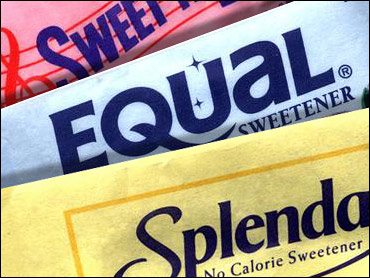
Question of the week: The Sweet N' Low-Down on Artificial Sweeteners?

The following question was submitted by one of my readers for discussion on the blog, "I have diabetes and am wondering about whether stevia is safe for me to use.  Could you let me know which sweeteners will not have an effect on my blood sugar and if stevia is ok for me to use?"

Stevia (also marketed as "Truvia") is just one of many artificial sweeteners on the market today.  Splenda, NutraSweet, and Sweet N Low, are other sugar substitutes used in the same way as Stevia and all have been approved for consumption by the FDA. These sweeteners in particular have little to no calories and carbohydrate so the effect on your blood sugar will be minimal, if at all.  As with anything, use in moderation - as the products that these substances are found in are usually less than optimal (i.e. diet soda, snacks).

Stevia comes from a South American plant and it is the leaves that contains compounds that give it sweetness.  The Stevia leaves have been described as 10 - 15 times sweeter than sugar so you don't need much to get the sweetening effect.  The refined extracts of Stevia called steviosides (a white powder) claim to be 200-300 times sweeter than table sugar which may be too strong for certain people. Some feel that the product has a slight aftertaste.  Again, Stevia is okay for use, however I would suggest only in moderation.


Each of the artificial sweeteners is produced differently so they will all have different properties in relation to cooking.  Check with the manufacturer's website to see which artificial sweeteners are appropriate to cook with, bake with, or just use in beverages.

Thursday, February 10, 2011

Question of the Week: "Pre-Diabetes & Fruit. Is it ok?"

The following question was submitted by a reader for discussion this week, "I found out I have pre-diabetes.  I'm very confused and don't know what I should do to treat it.  My friend told me to avoid all fruits.  Could you help me with how to treat my new diagnosis and if it's ok to eat fruit? "

First, with any new diagnosis and any confusion you may have, I suggest you speak further with your doctor or a C.D.E. (Certified Diabetes Educator) to clarify all of your questions.

Those diagnosed with pre-diabetes are at higher risk to be diagnosed with Type 2 diabetes in the future however, there are things you can do to help prevent or delay that from occuring.   A healthy and balanced low fat diet that is also lower in calories is helpful.   Physical activity is also something that should be included into your daily routine.ay diabetes.

Fruit is a carbohydrate and that is probably what  causing you the confusion, however fruit is an excellent food to be including as part of your diet.  Instead of reaching for a cookie, or another unhealthy sweet snack - fruit is obviously a better choice.  Fruits are full of vitamins, minerals, fiber (which will keep you fuller, longer), and many other antioxidants and phytochemicals that have health benefits.

Since fruit is a carbohydrate, you do have to watch your portion sizes.  One serving of fruit has 15g of carbohydrate. 

Here are some sample serving sizes that all are equivalent to 15g of carbohydrate:
  • 1 Small Apple
  • 1 Small Orange
  • 1 Small Banana (4")
  • 17 Grapes
Keep in mind that dried fruits are also allowed but in much smaller portions.  Just 2 Tablespoons of raisins have 15g of carbohydrates!  This is because all of the water is taken out.  What would you rather have:    17 Grapes  or  2 Tablespoons of Raisins?    I think the grapes would be much more satisfying!
 
There is the same amount of carbohydrate in 4 oz of fruit juice as there is in a small piece of fruit (15g)!
 1 Small Apple has the same amount of carbohydrate as just 4oz of Apple Juice.
 And... the apple has more fiber and won't spike your blood sugar as fast.

Wednesday, February 2, 2011

Question of the Week: Healthy Pizza Choices?

The following question was submitted by one of my readers, "Friday nights my family & I have dinner at our favorite pizza restaurant. Now that I've been diagnosed with diabetes I don't know what to order. Could you help me with what (if anything) I can order?"

It is still possible to enjoy pizza as part of a healthy diet as long as you watch your portions and follow these guidelines when ordering:

a. When choosing toppings, stick with healthy fresh veggies such as peppers, onions, tomatoes, and mushrooms. Avoid toppings such as extra cheese, meatballs, ham, pepperoni, and sausage.

b. When possible, look for a whole wheat crust and/or thin crust. Avoid thick crusts, deep dish, or crusts stuffed with cheese.

c. Portion size is important. Stick with one slice and have a side salad (dressing on the side) prior to eating your pizza.

d. Skip the breadsticks and/or the garlic bread. Pizza already contains plenty of carbohydrate.

e.  **Avoid dipping sauces such as those available at Papa John's.

An even better alternative to dining out in a pizza restaurant is to make your own at home.  Many supermarkets carry fresh pizza dough (whole wheat), pizza sauce, and low fat/skim mozzarella cheese.  This way you can control the toppings and ingredients!  It is also fun to make it together.  Another option is to use the whole grain English muffins instead of the pizza dough.

Wednesday, January 26, 2011

Question of the week: Oh Nuts!!!!!

The following question was submitted by one of my readers to be addressed on my blog, "Are nuts ok to snack on and if so, are there certain types I should look for? "

Nuts are a great choice for a snack for almost everyone. They are chock full of vitamins, minerals, and other nutrients such as fiber! Nuts are naturally cholesterol free and contain only a trace of natural sodium (unless salt is added during roasting). Since nuts contain protein, "healthy fat" (monounsaturated or MUFAs), and fiber, they can be very satisfying.

While they are a healthy, "nutrient dense" snack, please keep the following in mind:
*Nuts are highly caloric and high in fat (albeit the healthy kind) so keep your serving to 1 handful to 1.5 handfuls per serving size.
*Look for varieties that are raw or dry roasted. Salt, honey roasting, cinnamon sugar and other "coatings" can add extra unwanted calories.

Extra Facts:
*Walnuts contain Omega-3s
*Peanuts contain folate and niacin (B-vitamins)
*Whole almonds are a naturally high source of vitamin E, calcium, magnesium and potassium. Almonds are the tree nut highest in protein, fiber, calcium, vitamin E, riboflavin, and niacin when compared ounce for ounce.

For more great information on these types of nuts and others:
http://www.nuthealth.org/

Wednesday, January 19, 2011

Question of the Week: How Often To Check Blood Glucose?

A reader submitted the following question for discussion on my blog, "How often should I check my glucose if I have type 2 diabetes?"

Blood glucose monitoring is an essential part of proper diabetes care. If you take insulin to manage your type 2 diabetes, your medical professional may recommend blood sugar testing one to three times daily , depending on the number of doses you take.

Ideal times for testing are usually before and after meals and before bedtime.

If you manage type 2 diabetes with other medications or with diet and exercise alone, you may be able to test your blood sugar level less often.

Most importantly, keep a log with the results of your testing so that you can track how well your current diabetes plan is working with your doctor or Certified Diabetes Educator.

Discuss blood glucose testing with your medical professional to see what is best for your plan.

Tuesday, January 18, 2011

Super Bowl Party Survival!

This February 6th, many of you may be attending a Super Bowl Party which can be a day of indulgence for not just sports fans, but for all those invited. Party spreads usually include everything from Buffalo wings to nachos, beer to soda, and chips with dip. With all these temptations in front of us, it is not uncommon for many to consume more than a day’s worth of calories just in appetizers alone. It is not necessary to deprive yourself of many of the delicious dishes that may be put before you; however, it is a good idea to watch the amounts of these items that we are consuming.

Below are some tips to help you still enjoy the big game and the goodies that go along with it:

1. Skipping meals before the game will cause you to binge on all the wrong types of food. Have a little protein, small meal with lots of fiber, or a piece of fruit before you go which will not leave you ravenous when the festivities begin.

2. Use a small salad-sized plate when choosing from the table. With a larger plate you are more likely to try and fill it.

3. Balance your plate with protein and fiber-rich foods such as lean meats, salad, vegetables, and fruits. Simpler is better; shrimp cocktail, crudités (without high fat dip) are great party staples to enjoy.

4. Try to steer clear of anything that is fried, cheesy, or oily. Stay away from mayo-based salads, greasy appetizers, fatty dips, or anything deep-fried.

5. Use oil-based dressings for your salad and put them on the side. Dip the tines of your fork in them before piercing your salad for flavor. You'll save on calories but not skimp on flavor.

6. Don't deprive yourself of the goodies being served as some of these particular dishes only come once a year. Sometimes a taste is all you need to satisfy a craving.

7. Although nuts are healthy, it is very easy to eat them mindlessly and end up eating more than just a handful which adds up in calories and fat grams.

8. Don't drink your calories (save it for the food). Drink water with your meals - add a lemon or lime slice for flavor. If you want to have a holiday drink, enjoy a wine spritzer instead of wine - you'll save on calories but not substitute flavor.

9. If possible, ask if you can bring an entree or side dish - that way you can make something healthier and have control of the ingredients that are in it.

10. When socializing, try to do it away from where the food is displayed. Out of sight, out of mind.

11. Have a little pre-game of your own – get together before the game begins and toss the ball around. A little exercise before the big game or at half-time and help burn some of those extra calories!